Ibrahim Soliman
Professor Zayas
ENG 210
November 25, 2024
Crisis In Afghanistan
Introduction
In recent years, we have seen previously unheard-of levels of air pollution in Afghanistan. Children, in particular, are seriously threatened by the nation’s rapidly declining air quality. Because Afghanistan has a low socioeconomic status, it faces many environmental injustices. The decline in air quality and its harmful impact on young children, particularly those aged 1–7, is alarming. The rates of child death that follow, as well as the neurological effects on these children, highlight the need for increasing awareness and taking action to address the harmful effects of air pollution on vulnerable populations in Afghanistan. Afghanistan’s future well-being and stability rely on the health and growth of its children, showcasing the immediate concern to tackle this issue. Environmental injustice makes life harder for already struggling communities by increasing inequality, insecurity, and health problems, so it’s important to create fair policies that address these issues and protect everyone.
Literature review
Environmental injustice occurs when pollution and resource scarcity cause more harm to some communities while providing clean air, water, and safer homes to others. This is a very important issue because it usually affects groups that already have problems, making their challenges, such as poverty and health issues, even harder to deal with. Environmental injustice might lead to big problems, such as squabbles over available resources or the long-term damages caused in reducing the quality of people’s lives. Knowing the ‘how’ and ‘why’ helps in finding solutions to ameliorate the systems that all become fair to every player in the field. Research into environmental injustices clearly delineates how these are bound into a relationship with conflict, unjust policies, and population vulnerabilities. Some research points out that the lack of resources renders a place unstable, but others focus on how some parts of town or rural areas are more vulnerable to pollution. Another important contribution in this area is represented by investigations on the impact of environmental injustice on children, especially from the low-income community. The contribution of this study is that it shows, from an environmental justice point of view, a vicious circle that continuously hurts the marginal groups. It further points out that resolving the issues will help in developing healthier and fairer communities. A very major issue of concern about environmental injustice is the way it affects the conflicting areas. For instance, Baratti (2023) states that the lack of resources, such as water or productive land, makes lives even more difficult in areas affected by groups such as Boko Haram and the Taliban. Where resources are scarce, one finds people fighting over what little they have; this leads to further poverty and violence, which again raises the degree of severity of living for the poorer population. Hassaniyan (2024) has also explored the ways in which water policies in Iran are detrimental to rural areas: while the government is very focused on large cities, this leaves the rural areas with not much clean water, hence exacerbating environmental problems. Both studies have shown that when governments don’t manage resources fairly, the gap between those with and without resources grows.
The most polluted areas, because of the cities, include some communities that are also badly affected. Briggs et al. (2008) discuss how the poorer neighborhoods in England have higher levels of pollution due to outdated zoning laws and the setup of industries long ago. This results in health issues among the inhabitants of these areas due to poor air and water quality. At the same time, Hassaniyan (2024) depicts a number of similar problems in rural areas of Iran, but instead of pollution, there is no clean water. Both studies explain how different types of environmental unfairness affect both cities and rural areas. This shows that the problem is not only about one type of environmental damage; it is about how resources are shared and managed in both city and country communities.
Children, especially, are more susceptible to some of the sources of environmental injustice. According to Mathiarasan and Hüls (2021), children from poor families have a greater degree of exposure to air pollution, together with generally having fewer resources available to deal with its consequences. Examples are living in places with poor air quality and less access to healthcare. This perpetuates a vicious circle: poor health is a constraint to overcoming poverty, while conversely, poverty will result in children continuing to stay in areas of higher pollution. Briggs et al. (2008) support this idea by demonstrating how pollution impacts entire communities, but Mathiarasan and Hüls narrow this focus specifically to children. Their work shows that remedying environmental injustice is not only about creating a better environment but also involves ensuring the health and availability of resources for the community to live healthy lives devoid of poverty. All these studies depict the connection of environmental injustice with bigger issues related to unfair systems and policies. Whether it is pollution in cities, the lack of water in the countryside, or how most victims are children, most of these problems usually stem from decisions made by those at the top. It is not because of bad luck, a freak accident, or even an act of God; it involves structures that are not fair to all. While these studies offer detailed insights into how environmental injustice works, much more needs to be done in terms of figuring out how to fix it. Fair policy development and giving marginalized communities the tools they need to create healthier, safer futures will be the solutions going forward. One possible solution could be ensuring that environmental laws and policies consider the needs of vulnerable groups. For instance, strict pollution rules in cities and access to clean water in rural communities would shrink the gap between wealthy and poor communities. The most important things to ensure are healthcare and education, so communities that suffer the most from environmental harm may have a chance to break the poverty-health cycle. By addressing environmental injustice head-on, society can begin to rectify the systems that have allowed these inequities to persist for far too long. The second important step is involving marginalized communities in environmental policy decision-making. Too often, the management of resources is discussed without them, and their voices are excluded from decisions made about their environment. This would ensure that such groups have a voice in the policies affecting their lives for better and more equitable solutions. The use of environmental justice will help create a world where everyone will be allowed to be successful irrespective of their place of residence and financial status.
In conclusion, environmental injustice is not a simple issue but one that affects communities in countless ways: resource scarcity, pollution, and even lack of basic needs like clean water. What has been stated demonstrates that these do not occur through natural chance but are more often than not due to policy and system maintenance that caters more to one group than another. We can see that fixing these unfair situations needs action in many areas, from better policies to providing marginalized communities with the resources they need. Only then can we start to create a more equal and lasting world.
What is happening in Afghanistan
Afghanistan’s high levels of environmental injustice and low socioeconomic status are connected. Countries facing these issues often deal with abnormally high air pollution. Socioeconomic factors, including poverty and lack of access to clean energy sources, further contribute to the pollution crisis, disproportionately affecting vulnerable populations. As David Briggs (2008) expresses, “Overall, our findings suggest that the siting of [hazardous] facilities does not merit high priority among the potential hazards and burdens to which minorities and the disadvantaged are disproportionately exposed” (p. 1618). Briggs concludes that toxic areas polluting the environment were not seen as a top priority regarding the threats minorities and underrepresented groups face.
This is connected to the current state and causes of air pollution in Afghanistan, emphasizing the importance of focusing on environmental problems in places where weaker groups are more likely to be affected. For instance, only 39% of Afghanistan’s population has access to clean and basic sanitation. As Baratti (2023) observes, “Socioeconomic pressure amplifies environmental and climatic phenomena, which, in turn, aggravate the condition of socioeconomic vulnerability in which individuals find themselves” (p. 14). The connection between socioeconomic factors and environmental challenges suggests that addressing environmental injustice requires consideration of broader socioeconomic pressures. Additionally, air pollution in Afghanistan is made worse by relying on inefficient methods of heating and the use of low-quality fuels, especially in urban areas like Kabul. This not only degrades air quality but also disproportionately impacts the health of marginalized groups, including women and children who spend more time indoors. Policy interventions for such problems must therefore focus on bringing together public health and environmental legislation, address root causes of pollution, and incorporate priority needs of the most vulnerable by:.
The Government response
Responses by both government and non-government to environmental injustice are critical for overcoming harm to the environment and the social unfairness that makes it worse. Complete approaches in the development of policies, creation of laws, involvement of communities, and long-term investments in sustainable solutions are very important. This is a critical role that governments can play in making laws and rules that will reduce pollution, encourage smart use of resources, and help the fight against climate change. Most of them usually target the reduction of harmful emissions from factories, promote cleaner energy technologies, and enforce environmental regulations. On the other hand, governments must invest in building systems that ensure clean air and water quality, control waste management, and encourage green energy alternatives. All these investments contribute to curbing environmental degradation and hence improving life quality for humans, especially the low-income population groups who are the most vulnerable to environmental abuse.
Governments have a responsibility to address the social and economic conditions that contribute to and exacerbate environmental injustices, along with environmental regulations. This includes making policies that decrease poverty, improve access to quality healthcare, and provide opportunities in education. It is so crucial that children can get access to these services, as they are more impacted by environmental problems such as air pollution and bad sanitation. On the economic value creation side, job creation programs, vocational training, and infrastructure investments can bring about the possibility of removing communities from cycles of poverty and environmental degradation. With such measures, people and families in underserved areas can achieve a better economic status and be less reliant on environmentally deleterious practices for heating and cooking.
Nongovernmental organizations support the efforts of the government in the promotion of policies focused on environmental justice by working directly with the communities. Often, NGOs lead the way in creating awareness among people of the long-lasting effects of environmental damage and the need for urgent change. They can help connect local communities and the government, ensuring that the voices of the most marginalized groups are heard in decision-making. Nongovernmental organizations can provide direct assistance in terms of resources and services, including education and health programs, as well as access to clean energy technologies. This is because NGOs collaborate with governments that support sustainable development practices within communities, allowing them to adapt to environmental challenges in ways that best fit local needs and cultural backgrounds.
How are the children affected?
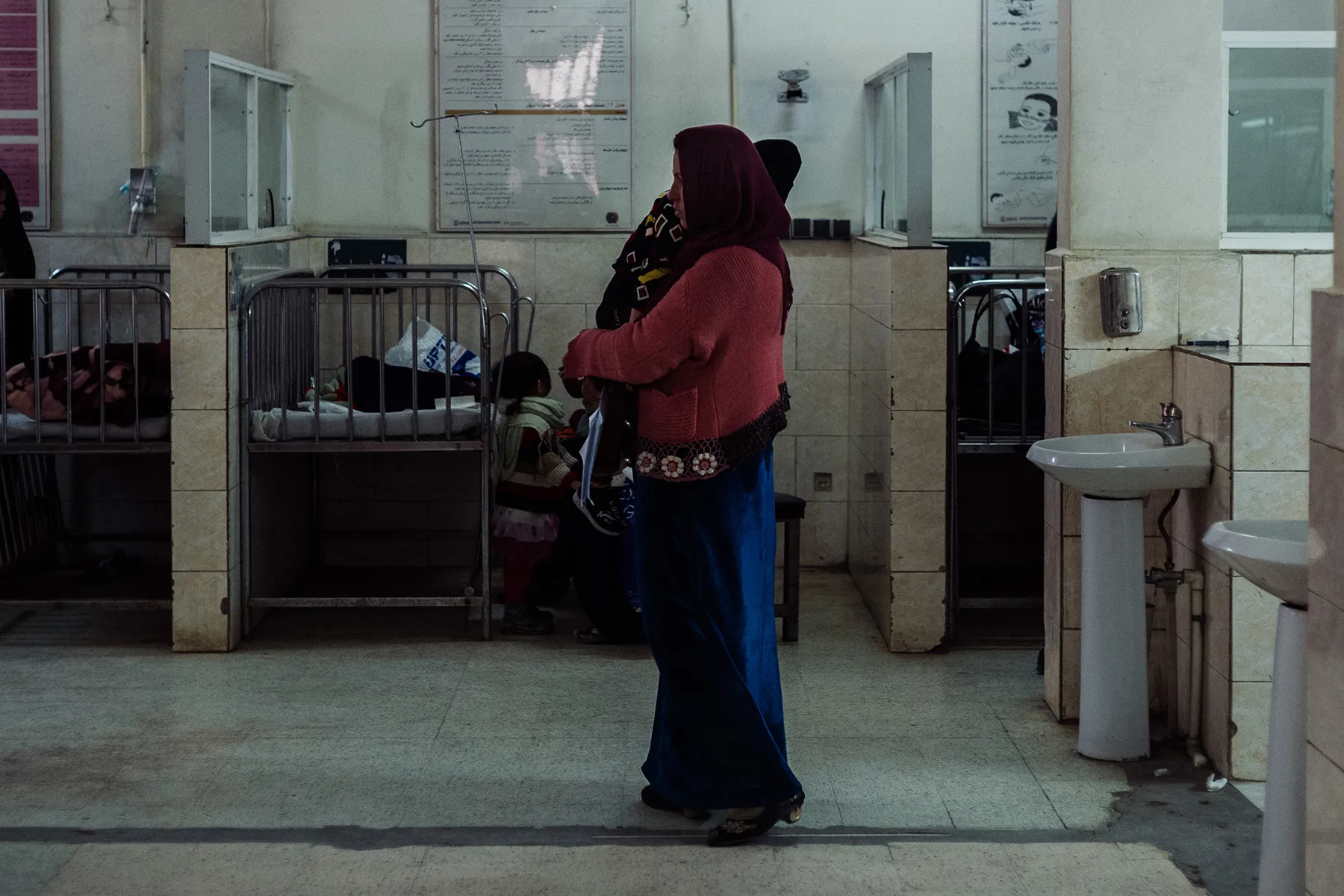
Many children, particularly those under age five, have lost their lives due to this traumatic event. Young children are particularly vulnerable to health effects from air pollution, such as respiratory infections, asthma, and other illnesses. Studies have shown that exposure to high levels of air pollution can have severe consequences for children’s health, leading to increased mortality rates and developmental challenges. In Afghanistan, where air quality is very poor due to vehicular emissions, industrial pollution, and the burning of solid fuels for cooking and heating, the impact on children is severe.
Mathiarasan and Hüls (2021) demonstrate, “Air pollution provides one of the highest environmental health risks for underserved communities. The intersection of outdoor and indoor air pollution with socioeconomic status can result in many adverse health outcomes” (p. 8). Their research highlights the disproportionate impact on neurodevelopment in children from lower socioeconomic backgrounds due to polluted environments. This emphasizes how environmental injustice affects developing countries like Afghanistan.
Building on this, the connection between socioeconomic factors and environmental hazards creates an exchange that intensifies vulnerable communities. Usually, lower socioeconomic communities face increased exposure to environmental pollutants through proximity to industrial zones, poorly regulated urban planning, and inadequate infrastructure for waste management. Poor indoor air quality significantly worsens in developing countries like Afghanistan, where the majority of its households burn solid fuels indoors for cooking and heating, with very limited access to clean energy. This use has potential respiratory and heart health impacts and long-term cognitive functioning effects among children on school performance. Besides that, the deficiency of strict environmental rules and their enforcement maintains existing health inequalities, which in turn makes a vicious cycle very difficult to overcome. These findings indicate the need for urgent international interventions that address environmental justice, sharing resources equitably, and the adoption of sustainable development measures as a means of mitigating the intergenerational burden on vulnerable groups.
Are there other countries affected by environmental injustices?
This problem is not only in Afghanistan but also in Iran. Iran is currently working on building large dams and inter-basin water transfer (IBWT) projects, which have caused serious problems like deforestation, desertification, water pollution, and the drying up of wetlands. Even with these harmful effects, the Iranian government still focuses on industrial growth instead of environmental health. The government’s water policies often benefit powerful industrial interests while negatively impacting local communities. This has encouraged movements for environmental justice among marginalized groups who are demanding fair access to water and better management of natural resources. Kalantari, I. (2017). “Today there is no wetland or lake in the country not affected by our activities. We are the most selfish generation that has lived in this land for 7000 years” Iranian Students’ News Agency.
The students bring out an understanding of the environmental disasters created by their government, especially in managing water and big infrastructure projects such as dams and inter-basin water exchanges. To illustrate, Kalantari points out that all wetlands and lakes have been affected, showing how destructive the damage is, with his emphasis on how the entire country has lost its natural health. He makes the audience, and especially those referred to by the phrase “the most selfish generation,” feel accountable and guilty for not doing enough as leaders and individuals within this generation to preserve the environment for the benefit of future generations. Overall, this quote shows how serious the environmental crisis is in Iran and urges the government to rethink its policies, which have been mainly focused on industrial growth at the cost of environmental sustainability. Because, as I mentioned before, not only the citizens are being affected but the children as well.
Conclusion
In conclusion, Afghanistan suffers severely from air pollution, especially the health of its children; those most vulnerable in society suffer the most. Socioeconomic issues and a lack of access to clean energy further worsen the problem. Urgent action must be taken to improve the quality of the air and to provide clean energy for fair access to resources. However, Afghanistan is not alone, Iran also endures environmental damage resulting from major developments such as dam building, deforestation, desertification, and water pollution. Despite these impacts, industrial development remains a goal. Both countries reflect the urgent need for sustainable development and international cooperation to protect vulnerable populations and secure a healthier future.
References
Baratti, R. M. (2023). Environmental injustice as a multiplier of injustice and human insecurity: The cases of Boko Haram and the Taliban. Environmental Justice, 16(3). https://doi.org/10.1089/env.2022.0060
Briggs, D., et al. (2008). Environmental inequity in England: Small area associations between socio-economic status and environmental pollution. Social Science & Medicine, 67(10), 1612–1629. https://doi.org/10.1016/j.socscimed.2008.06.040
Mathiarasan, S., & Hüls, A. (2021). Impact of environmental injustice on children’s health—Interaction between air pollution and socioeconomic status. International Journal of Environmental Research and Public Health, 18(2). https://doi.org/10.3390/ijerph18020795
Hassaniyan, A. (2024). Iran’s water policy: Environmental injustice and peripheral
marginalization. Progress in Physical Geography: Earth and Environment.
https://doi.org/10.1177/03091333241252523

